Trusted Electrician Services Across Arizona
WATT911 connects Arizona property owners with independent, licensed local electrical contractors where genuine network coverage exists. Experience rapid telephone intake for diagnostic troubleshooting, 200A service panel modernization, whole-home rewiring, EV charging infrastructure, and commercial power distribution.
Electrical Services We Help You Find
From residential troubleshooting to heavy commercial tenant improvements, explore the six core electrical categories supported across our Arizona network.
EV Charger Installation
Dedicated 240V Level 2 charging station installation for electric vehicles, garage conduit runs, and utility load assessment.
Explore EV Chargers SolutionsGenerator Installation
Whole-house standby generators, automatic transfer switch (ATS) integration, and manual interlock subpanel connections.
Explore Generators SolutionsElectrical Panel Upgrades
Upgrading aging 100A service to modern 200A or 400A breaker panels to accommodate heat pumps, AC, and high-load appliances.
Explore Panel Upgrades SolutionsCommercial Electrical
Commercial tenant improvements, three-phase power distribution, commercial lighting retrofits, and building code compliance.
Explore Commercial SolutionsElectrical Repair
Troubleshooting circuit faults, tripped breakers, malfunctioning outlets, switches, and sudden power loss safely.
Explore Repair SolutionsElectrical Rewiring
Whole-home or partial branch rewiring, modern copper Romex updates, grounding improvements, and obsolete wire remediation.
Explore Rewiring SolutionsHow the WATT911 Arizona Referral Model Functions
Navigating residential and commercial electrical contracting in Arizona requires clarity, technical expertise, and rigorous licensing compliance. WATT911 operates as an independent lead-generation and marketing network. We are not an electrical contracting business, we do not directly employ electricians, and we do not perform electrical trade work on customer premises.
Instead, WATT911 bridges the gap between discerning property owners and independent, third-party electrical contracting businesses operating across Maricopa, Pima, Coconino, and Yuma counties. By focusing on marketing and intake routing, we enable licensed independent contractors to dedicate their operational focus entirely to trade craftsmanship, municipal code compliance, and safety inspections.
Independent Contractor Licensing & Regulatory Oversight
In the State of Arizona, electrical contracting is strictly regulated by the Arizona Registrar of Contractors (ROC) pursuant to Arizona Revised Statutes Title 32, Chapter 10. Residential electrical work requires a licensed entity holding an ROC R-11 Residential Electrical license. Commercial projects mandate an ROC C-11 Commercial Electrical license, or a comprehensive ROC CR-11 Dual Electrical license. Independent contractors in our referral network operate as separate, autonomous commercial businesses and are solely responsible for maintaining active license credentials, commercial liability insurance, workers' compensation coverage, and local municipal permits.
Customer Rights & Contractual Responsibilities
When you call our telephone intake desk at (888) 605-9975, our coordinators evaluate your project requirements and route your inquiry to independent participating contractors serving your specific municipality. It is vital to recognize that calling WATT911 or submitting an online inquiry does not guarantee contractor availability or job acceptance. Service availability depends entirely on independent contractor scheduling and geographic coverage.
All project estimates, written scopes of work, diagnostic fees, and warranties are executed directly between you and the responding independent contractor. We strongly advise all consumers to independently verify a contractor's active license status and disciplinary history on the public Arizona Registrar of Contractors website before authorizing work or executing contracts.
Read More About WATT911 →
Serving Communities Across Arizona
Explore dedicated municipal directories featuring distinct local housing characteristics, utility coordination protocols, and building safety authorities.
Phoenix, AZ
Jurisdiction: Maricopa County • Utility: Arizona Public Service (APS) and Salt River Project (SRP)
With extensive post-WWII residential expansions across central Phoenix, Encanto, Arcadia, and Sunnyslope, tens of thousands of mid-century block homes still retain original 60A to 100A panels or aging split-bus breaker configurations that struggle under heavy multi-ton AC cooling demands and modern induction ranges.
Permit Authority: City of Phoenix Planning & Development Department
Phoenix enforces the 2017/2020 NEC with local municipal amendments. Residential panel replacements require a self-certification program or scheduled utility disconnect/reconnect inspection. All outdoor meter equipment exposed to western solar exposure must be NEMA 3R rated.
Tucson, AZ
Jurisdiction: Pima County • Utility: Tucson Electric Power (TEP)
Tucson features a distinctive blend of historic mud adobe, burnt adobe, and mid-century red brick ranch homes throughout Sam Hughes, Menlo Park, and Winterhaven. Intense summer monsoon microbursts and high dust levels accelerate oxidation on outdoor knife disconnects and ungrounded branch circuits.
Permit Authority: City of Tucson Planning & Development Services Department (PDSD)
Tucson PDSD strictly regulates electrical reconnections, service capacity increases, and subpanel additions. Work within the City of Tucson historic preservation zones (e.g., El Presidio, Barrio Historico) requires architectural review for exterior conduit placement.
Mesa, AZ
Jurisdiction: Maricopa County • Utility: City of Mesa Electric Utility and Salt River Project (SRP)
As one of the East Valley's largest municipalities, Mesa contains established subdivisions from the 1960s to 1980s in West Mesa, contrasted with expansive master-planned developments in Eastmark and Dobson Ranch. Expanded multi-generational families frequently strain original branch circuits with multiple high-draw kitchen and refrigeration appliances.
Permit Authority: City of Mesa Development Services Department (Building Safety Division)
Mesa enforces strict clearance mandates around main electrical meters and requires formal permits for all service changes, pool subpanels, and whole-building rewiring. A city electrical inspection must precede utility reconnection.
Chandler, AZ
Jurisdiction: Maricopa County • Utility: Salt River Project (SRP) and Arizona Public Service (APS)
A premier tech hub in the Silicon Desert, Chandler consists largely of homes built from the 1980s through the 2010s in master communities like Ocotillo and Fulton Ranch. High electrical loads stem from extensive home automation systems, dedicated computer server closets, swimming pool variable-speed pumps, and dual EV garages.
Permit Authority: City of Chandler Development Services Department (Building Division)
Chandler enforces online plan submittal for commercial tenant electrical work and fast-track over-the-counter permitting for residential 200A service changes and Level 2 EVSE installations.
Gilbert, AZ
Jurisdiction: Maricopa County • Utility: Salt River Project (SRP)
Gilbert has transformed rapidly into a family-centric community dominated by spacious 3,000+ square foot homes built from 1995 onward. High rates of electric vehicle ownership and outdoor resort-style backyard living (casitas, misting pumps, landscape lighting) push standard 200A panels toward their maximum ampacity.
Permit Authority: Town of Gilbert Development Services (Building Division)
Gilbert enforces electronic plan review and mandatory pre-pour inspections for underground conduit runs. Residential solar interconnections and EV charging additions require comprehensive load calculations submitted prior to inspection.
Glendale, AZ
Jurisdiction: Maricopa County • Utility: Arizona Public Service (APS) and Salt River Project (SRP)
Glendale encompasses historic downtown neighborhoods around Catlin Court and established mid-century residential tracts near Sahuaro Ranch. Many 1960s and 1970s residences still retain obsolete aluminum branch wiring or Zinsco/Sylvania panels with breaker clips known to melt to the bus bar under persistent desert AC demands.
Permit Authority: City of Glendale Development Services (Building Safety)
Glendale requires permits for all panel upgrades, circuit extensions, and commercial tenant buildouts. Inspections verify AFCI protection for all bedroom and living room branch circuit retrofits.
Scottsdale, AZ
Jurisdiction: Maricopa County • Utility: Arizona Public Service (APS) and Salt River Project (SRP)
Spanning mid-century modern ranches in South Scottsdale to multi-million-dollar custom estates in DC Ranch, Troon, and Silverleaf. High-end luxury properties routinely demand 400A to 600A commercial-grade services to operate complex architectural lighting, extensive wine rooms, multi-zone HVAC chillers, and guest casitas.
Permit Authority: City of Scottsdale Planning & Development Services
Scottsdale enforces stringent exterior aesthetic requirements in Environmentally Sensitive Lands (ESL) zones. Exposed conduits on stucco facades must be painted to match building colors, and service upgrades require strict utility alignment.
Tempe, AZ
Jurisdiction: Maricopa County • Utility: Arizona Public Service (APS) and Salt River Project (SRP)
Home to Arizona State University, Tempe is characterized by dense rental housing, mid-century residential tracts in Daley Park and Broadmor, and modern high-rise urban towers along Tempe Town Lake. Heavy tenant turnover, high appliance usage, and DIY wiring alterations create pressing needs for professional diagnostics and grounding remediation.
Permit Authority: City of Tempe Community Development (Building Safety Division)
Tempe publishes dedicated residential electrical service replacement guidance. All service replacements require an express permit and coordination with APS/SRP for meter disconnect and re-tagging.
Flagstaff, AZ
Jurisdiction: Coconino County • Utility: Arizona Public Service (APS)
Perched at 7,000 feet in the San Francisco Peaks, Flagstaff housing includes historic mountain cabins, 1970s chalets in Cheshire and Coconino Country Club, and modern timber-frame homes. Severe winter blizzards and prolonged freezing temperatures make electric heating circuits and standby generator interlocks vital life-safety priorities.
Permit Authority: City of Flagstaff Community Development (Building Safety Division)
Flagstaff enforces the International Building Code with specific Northern Arizona snow and frost line amendments. All outdoor electrical installations, conduits, and generator pads must account for frost heave and heavy roof snow shedding.
Yuma, AZ
Jurisdiction: Yuma County • Utility: Arizona Public Service (APS)
Located at the convergence of the Colorado and Gila rivers, Yuma features military family housing, historic Old Town residences, and extensive seasonal snowbird communities in the Foothills. Older winter-resident homes frequently sit vacant for months before facing continuous, maximum-load AC usage during 115°F+ summer peaks.
Permit Authority: City of Yuma Community Development Department (Building Safety)
Yuma Building Safety mandates formal permits and rough-in inspections for all residential rewiring, agricultural service drops, and commercial equipment connections. Verification of proper neutral-to-ground bonding is strictly enforced.
Need Professional Electrical Service in Arizona?
Speak directly with our telephone intake coordinators. We will evaluate your project requirements and route your inquiry to independent, licensed electrical contractors currently scheduling service in your Arizona city.
Call (888) 605-9975 for Local Referral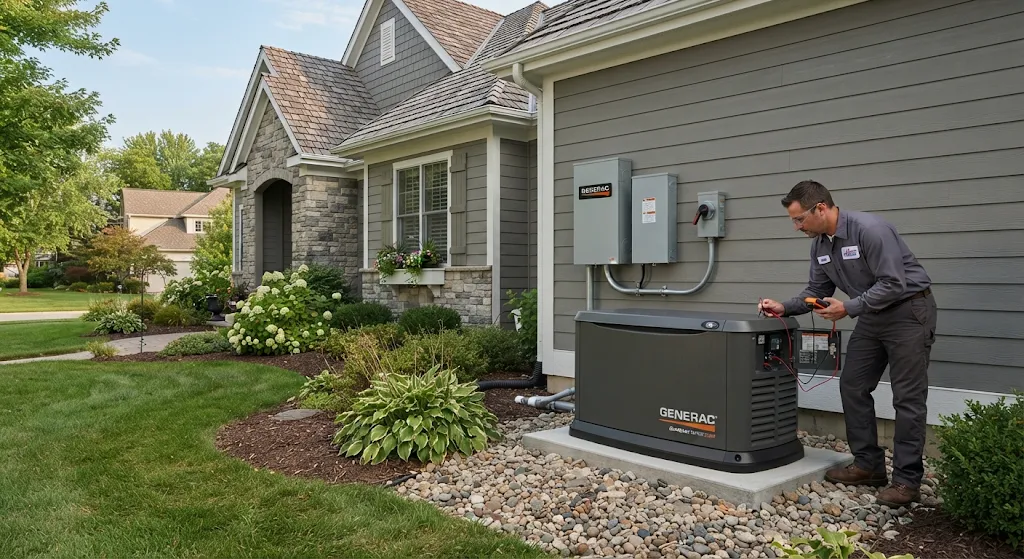
Arizona Climate Realities: Thermal Derating, Haboobs & Mountain Freezes
Operating electrical systems in Arizona presents environmental and physical challenges rarely encountered in temperate regions. The state encompasses diverse bioclimatic zones—from the extreme low-elevation desert heat of Yuma and Phoenix to the 7,000-foot alpine mountain snowlines of Flagstaff.
Extreme Ambient Heat & Conductor Derating
In central and southern Arizona valleys, ambient summer air temperatures regularly exceed 115°F, with unconditioned attic spaces soaring past 140°F to 160°F. Under National Electrical Code (NEC) Table 310.15(B)(1) and Table 310.15(B)(2), electrical conductors routed through elevated ambient temperatures must be subjected to formal ampacity correction (derating) factors. A copper conductor rated for 30 amperes at 86°F (30°C) may have its allowable ampacity reduced by up to 42% when exposed to attic heat, meaning undersized conductors powering heavy air conditioning units can rapidly overheat, degrading insulation jackets and creating fire hazards.
Monsoon Microbursts, Haboobs & Surge Suppression
The summer monsoon season brings violent microburst winds, massive dust haboobs, and intense atmospheric electrical discharges. Airborne dust and alkaline particulate accumulate inside exterior NEMA 3R meter enclosures and mechanical transfer switches, accelerating contact oxidation. Furthermore, lightning strikes and utility capacitor switching introduce severe transient overvoltage spikes into residential wiring. Modern electrical code mandates Type 1 or Type 2 whole-house surge protective devices (SPDs) installed directly at the main service panel to protect microprocessors in variable-speed AC inverters, smart appliances, and home automation systems.
Alpine Cold & Winter Freeze-Thaw in Northern Arizona
Conversely, Northern Arizona communities such as Flagstaff experience heavy snowfall exceeding 100 inches annually and sub-zero winter temperatures. In these regions, electrical infrastructure must resist severe frost heave. Underground service laterals and generator fuel conduits must be trenched well below the statutory 30-inch municipal frost line, and outdoor generator enclosures must feature cold-weather starting kits (oil pan heaters and battery warmers) to guarantee automatic power restoration during winter storm grid failures.
Frequently Asked Questions About Arizona Electrical Services
Essential facts regarding licensing, municipal permits, utility coordination, and independent contractor matching.
WATT911 is an independent referral and marketing network. WATT911 is NOT a licensed electrical contracting business, does not employ electricians, and does not perform physical electrical installations or repairs. All trade services are performed exclusively by separate, independent contractor businesses licensed by the Arizona Registrar of Contractors (ROC).
You can verify any contractor's licensing credentials by visiting the official Arizona Registrar of Contractors website (roc.az.gov) and searching by contractor business name or license number. Ensure the license status is 'Active', verify that the classification matches your project type (R-11 for residential, C-11 for commercial), and check for any unresolved administrative complaints.
In all Arizona municipalities (including Phoenix, Tucson, Mesa, Chandler, and Scottsdale), permits are legally required for major electrical work. This includes replacing or upgrading a main electrical panel, adding subpanels, whole-home rewiring, running dedicated 240V circuits for Level 2 EV chargers, installing standby generators, and performing commercial tenant improvements. Routine minor repairs like swapping an existing light switch or outlet generally do not require a permit.
Because the main service panel connects directly to high-voltage utility power lines, your local electric utility (such as APS, SRP, or TEP) must coordinate a scheduled service disconnect. The independent contractor performs the physical panel replacement, coordinates a safety inspection with the city building department, and upon municipal inspection clearance, the utility re-energizes the service and installs an approved digital meter.
WATT911 charges consumers nothing to connect with independent contractors. However, independent contractors establish their own pricing, dispatch rates, and diagnostic fees. For complex troubleshooting, contractors typically charge a diagnostic fee to isolate the underlying electrical fault using specialized test instruments. For planned installations like panel upgrades or EV charger circuits, contractors typically provide formal written estimates after evaluating project scope and panel capacity.